Showing posts with label Franklin D. Roosevelt. Show all posts

Monday, 16 September 2013

What If? Art 7: History Books That Never Existed

It has been six years since I posted any 'what if?' book covers on this site, the last being my spate of 'lost' books back in November 2007:  http://rooksmoor.blogspot.co.uk/2007/11/what-if-art-6-books-that-existed-but.html  The use of book art as an element of 'what if?' speculation has long interested me and my engagement with it is outlined here: http://rooksmoor.blogspot.co.uk/2007/08/what-if-art-1-history-book-that-never.html

For the cover of my latest 'what if?' anthology, 'Other Lives: ‘What If?’ Outcomes for Famous People in History' (2013), I considered doing gravestones or announcements in newspapers.  However, the people feature stretch from Alexander the Great in the 4th Century BCE right up to people in the 20th century.  In addition, not all the differences about the duration of their lives but also some of them taking different decisions.  As a result I returned to the idea of creating history books that never existed in our world.  I tried to keep as close as possible to the style that you find on history book front covers, though also to bring in a bit of variety.  These appear as small images on the front of the book.  However, I thought people might enjoy seeing them separately in a larger format here, with some explanation of why I decided on the different titles and formats.

One challenge was that to emphasise the alternate history aspect often required two things.  First the date has to be included to show the precise divergence from our history.  This is notable with the book on the impeachment of George Bush.  I included '1987' in the title, as I envisaged Bush becoming President following the assassination of Ronald Reagan in 1981, rather than being impeached during the term of office 1988-92 that he had in our world.  The other challenge for those who I was looking at as living longer than in our world, was to find images that showed them as older than they ever were in our history.  Thus, I had to work on the hairline of Julius Caesar and Abraham Lincoln and spread the grey in Indira Gandhi's hair far further than was the case in our history.

'Alexander the Great's Conquest of the Iberian Peninsula'


 For this cover I used an image of Alexander's father, King Philip II of Macedonia to stand in for the older Alexander the Great.  The book envisages Alexander living into his fifties rather than dying in his early thirties.  Thus, not only completing his conquest of western Asia but then turning to conquer the remainder of the Mediterranean region with this book focusing on his final conquests in what is now Spain and Portugal. 

'The Bactrian Campaign of Julius Caesar' 


The basis of this book is Julius Caesar surviving or preventing the assassination attempt against him.  As a result he lived on into his sixties and was able to carry out the conquests in western Asia that we know he had planned.  Bactria is the region of Central Asia between the Caspian Sea and the Hindu Kush, covering the modern central Asian republics.  It was a region Alexander the Great knew and Caesar had sought to conquer.  I worked to adjust the image to make it appear as if it showed an older, more wrinkled Caesar.  He was concerned baout hair loss and in this image I have him with some male pattern baldness.
'Parliament's Lost Leader: Oliver Cromwell 1599-1643'


This is another example of a cover that needed dates on it to show that it was Cromwell's earlier death, in this case in battle in 1643, rather than peacefully in 1658 which was envisaged.  By this stage Cromwell was significant in the Parliamentarian camp but was not yet in a position to become leader of the country.  Thus this book would ask what missed opportunity the country had with him being killed at this stage.  If his death was earlier then it is unlikely he would have warranted his own historical study. 

'1777 - The End of the American Bid for Independence'


In my book, the focus is largely on George Washington dying at Valley Forge along with many of his troops in the winter of 1776/7.  However, if he had died then, his fame might not have been sufficiently significant to warrant a book of his own, so I envisage this one seeing with his death, the break up of the Continental forces and the end of the attempt of the Thirteen Colonies to break from British control.  This is a manipulated painting which actually shows Continental soldiers being trained.  However, it seemed to sum up the difficulties at Valley Forge and the three men at the front are in very submissive positions and look as if they are laying down their arms, assuming they have been captured by the British.  The background is the Continental flag of the time.
  
'Lincoln's Post-War Administrations 1865-1872'


This book like the one on Caesar envisages Abraham Lincoln surviving assassination in 1865 or that never having been attempted.  Again I needed to age him in the photo and I added in a map of the USA from the post-Civil War period to show Lincoln living on into this period.  His survival would have meant much more difference to that period of US history than I initially realised. 


'The World Economic Depression and the Demise of Capitalism'


This uses the classic Progress Publishers style for a book that never existed.  Progress Publishers were a Soviet back publishing house that made Communist literature available in cheap editions in the hope that ordinary people would buy them.  They were typically purchased by students who had to read set books.  This one would have been published in 1931 assuming that Lenin had not died in 1924 but had lived on as leader of the USSR.  The Great Depression which began with the Wall Street Crash of 1929 appeared to many Communists and Fascists to be the proof that capitalism could not work and that a different political approach was necessary.  One could imagine Lenin delighting in his emotionless way to the difficulties capitalism was facing and have hoped that the world Communist revolution was imminent.

'The Overthrow of President Franklin D. Roosevelt'


This one envisages the planned coup d'état of 1934 actually going ahead, leading ultimately to Franklin Roosevelt being pushed from power, probably forced to retire on grounds of ill-health.  I felt this picture might be his resignation speech to the nation.  This was a scenario that I had not envisaged leading to such a bleak outcome for the world as a whole.  However, it quickly became apparent that without the New Deal and certainly Roosevelt's almost one-man attempt to involve the USA in the Second World War not only would that war have dragged on longer but the US and the global economies would have struggled to return to any kind of prosperity well into the 1960s. 

'Gustav Stresemann and the Decline of National Socialism 1931-35'

  
As a bit of a contrast, for this one rather than use a photograph, I picked a commemorative stamp for Gustav Stresemann.  I manipulated the dates on it so he is shown as living to 1936 rather than dying in 1929 as was the case in reality.  The point behind this book is that probably only Stresemann had the skill and appeal across the political spectrum to undermine National Socialism, the proper name for Nazism.  He was a conservative and a nationalist but certainly never sought anything like the regime Hitler installed.
'A King of Our Times - Edward VIII, 1936-72' 

This is another one in which the date was necessary to show the change.  This is a late picture of the Duke of Windsor who in our world ruled briefly in 1936 before abdicating so he could marry the American divorcee, Wallis Simpson.  This book envisages he never met Simpson or he chose to remain on the throne.  The trouble with Edward was his willingness to interfere in politics, engage in illegal currency deals and his sympathies for Nazism.  Given he would have been influential in the run-up to the Second World War, it is likely that this would have had an impact on British foreign policy.  I have opted for the styling of a bland 1970s book on monarchy that you can see online which belies the kind of difficulties this alternative would have brought to Britain.
'The Collected Articles of Benito Mussolini' 


It was quite a challenge to find a photo of Mussolini in which he was not in military clothes, shaven headed and pontificating.  This is a surprisingly human picture of him that seemed to fit really well with the different path envisaged, i.e. rather than becoming a dictator, he remained a Socialist journalist.  As a consequence, rather than being executed in 1945, I envisaged him living into old age.  His longevity and his writing is likely to have meant that he received some attention across Europe, perhaps even becoming a kind of older statesman of Socialism, though maybe not to the scale of Antonio Gramsci.
  
'The Assassination of Charles De Gaulle'


This is an old image dating back six years, which I revived for the chapter in 'Other Lives' on the assassination of De Gaulle.  I removed the date from this one as the chapter speculates on his killing at a number of dates.  However, the picture is from the early 1960s so suggests an assassination at that time.  As I wrote the chapter, my views on when the assassination would have had greatest impact shifted back in time a little.  However, I think this is one feasible 'what if?' which tends to be overlooked by writers. 
'Nixon as President: The Second Term, 1964-68' 


As is often the case with these alternate history covers I start with an actual history book.  This ones envisages Nixon being first elected in 1960 when he was narrowly beaten by John F. Kennedy, rather than in 1968.  The picture fits with the timescale of the book.  The 'button', i.e. the badge, is a genuine image of one produced for the 1964 election when Lyndon Johnson won.


'China's Reprieve: The Fall of Chairman Mao, March 1966' 


This centres on a picture of Mao Zedong with his likely replacement if he had been overthrown in the mid-1960s, Deng Xiaoping.  While China would have remained a totalitarian dictatorship under Deng, it certainly would have been spared the madness of the Cultural Revolution 1966-76 that caused so much damage to the country.  The Cultural Revolution was primarily about Mao re-establishing his predominance in China, so with him being ousted, which seemed possible at this time a different path would have been followed.

'The Indian Dictatorship, 1984-89'


This was another book about a leader avoiding being assassinated.  The idea is that Indian Prime Minister Indira Gandhi avoided being assassinated in 1984 yet the attempt on her life and accompanying turmoil in the country led her to impose a dictatorship as she had effectively done in the 1970s.  For this picture I had again to try to age the image and I think it comes out reasonably well, with Gandhi's streak of grey having spread more widely across her hair.  This picture with the furrowed brow makes her look older too. 
'The Impeachment of President Bush'
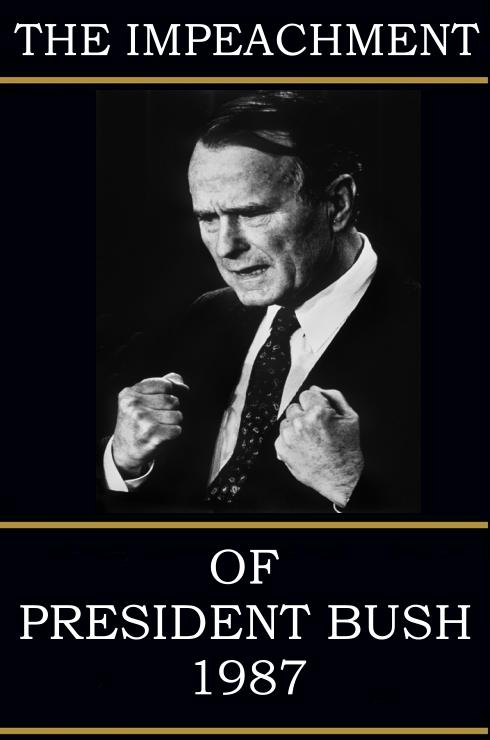


I have explained the reason for the date at the start of this posting.  This cover is to signify a chapter which is less about Bush than about the implications of the assassination of Ronald Reagan in 1981.  With the De Gaulle one in place, I did not want another title with assassination.  The chapter naturally envisages Bush as Reagan's Vice-President, as Johnson did after Kennedy's assassination, taking over at his death and serving out Reagan's term, then being elected himself.  Furthermore it seems likely that Bush would have become directly involved in the Iran-Contra scandal and this would have led to him being charged with wrongdoing and to his impeachment.  It is probable that in such a situation Bush would have resigned as Nixon did when threatened with impeachment.  However, I picked this image as it suggested Bush had the pride and arrogance to hold on and to fight against the charges.

Sunday, 1 July 2012

Roosevelt and Contesting the Plutocrats

This one is going to start by sounding rather obscure but in fact goes to the way in which we properly respond to the financiers who have plunged us into the economic chaos that we are now facing simply for their own greed. Last week I was reading an article by Jonathan Raban in 'The Guardian' (24th January edition) analysing the inaugural speech by Barack Obama and comparing it with such speeches in the past. As he showed the US Presidential inaugural speeches have rather become fossilised in form and actually despite being so restrained, Obama and his primary speechwriter Jon Favreau used the speech to attack the regime of George W. Bush and try to outline a more accepting liberal USA for the future. This element of Raban's article was interesting and I have no complaint about it. Where I had more issue was with his comments on the first inaugural speech of Franklin D. Roosevelt in 1933.

Roosevelt was elected president four times, dying in 1945 shortly into his fourth term; these days US presidents are only permitted to serve two four-year terms, unless they come to office through the removal of the sitting president; Vice President Lyndon Baines Johnson became president in 1963, was elected in his own right in 1964 and could have been re-elected in 1968 if he had chosen. The importance of Roosevelt's 1933 speech is that the world was in a similar position to today. The Wall Street Crash of October 1929 had helped precipitate the widespread economic collapse (though it had begun as early as 1927) especially in 1931 (when the Austrian Creditanstalt Bank collapsed and the British Labour Government also collapsed after only 2 years in office) and by 1933 was leading to the highest levels of unemployment that the world had seen. US unemployment reached 13 million people, 24.9% of the workforce in 1933; in Germany, 1933 being the year the Nazis came to power it was over 6 million unemployed, 34% of the workforce.

Thus, Roosevelt came to power as a liberal president following the conservative Herbert Hoover, at a time when the economic crisis was well underway. Thus, 1933 was not directly equivalent to 2009; we are probably in something more like 1930 now. However, both Roosevelt and Obama had to make a clear lead in terms of what they were going to do to tackle the economic problems. Obama had a lot less room for manoeuvre in what he could include in his speech though was challenging a wider range of issues that Roosevelt (for example, recent US foreign and human rights policy, as well as the economic crisis). Raban is right that Roosevelt's speech was more ground-breaking and memorable, but interestingly he also feels that it was anti-Semitic. I think Raban's analysis is lazy (something which seems rather too prevalent in 'The Guardian' newspaper recently, note my critique of John Cartwright's piece on the 20th July plot last month) and to some degree by labelling Roosevelt as having anti-Semitic tendencies (even if these inadvertent) in his speech, he undermines what attacks we might make on the plutocrats of today using Roosevelt's language.

The element of the 1933 speech which attracts Raban's criticism is the following passage. I quote more of it than Raban did/was able to:

"... Yet our distress comes from no failure of substance. We are stricken by no plague of locusts. Compared with the perils which our forefathers conquered because they believed and were not afraid, we have still much to be thankful for. Nature still offers her bounty and human efforts have multiplied it. Plenty is at our doorstep, but a generous use of it languishes in the very sight of the supply. Primarily this is because the rulers of the exchange of mankind's goods have failed, through their own stubbornness and their own incompetence, have admitted their failure, and abdicated. Practices of the unscrupulous money changers stand indicted in the court of public opinion, rejected by the hearts and minds of men.
True they have tried, but their efforts have been cast in the pattern of an outworn tradition. Faced by failure of credit they have proposed only the lending of more money. Stripped of the lure of profit by which to induce our people to follow their false leadership, they have resorted to exhortations, pleading tearfully for restored confidence. They know only the rules of a generation of self-seekers. They have no vision, and when there is no vision the people perish.

The money changers have fled from their high seats in the temple of our civilization. We may now restore that temple to the ancient truths. The measure of the restoration lies in the extent to which we apply social values more noble than mere monetary profit. ..."

Now Raban feels that reference to moneychangers in the temple, taking from the incident in the Bible (Gospel of St. Matthew 21:12; Gospel of St. Mark 11:15) in which Jesus goes into the 'Temple of God' and threw out 'all that bought and sold in the temple', particularly the moneychangers and those selling doves/pigeons. The assumption of course is that the traders in the temple were Jews but neither writer suggests that this is the case. It is quite possible that a mix of people were trading in the temple, ironically in a way medieval churches in the western world were often used centuries later. Added to this, of course, at the time Jesus was breaking up this trade he was not a Christian, but a Jew. No-one was a Christian as we would define it, while Jesus was alive because what we define as Christianity was only established as a result of Jesus's death.

The central element of Christianity is Jesus's death and resurrection, so without that having happened, you could not have Christians. Thus, Jesus's actions were not someone of a different faith acting against Jews, they were the actions of a Jew acting against other people, some or many of whom were also Jews. You have to also contextualise this action in terms of 'Render unto Caesar the things which are Caesar’s, and unto God the things that are God’s' (words from Gospel of St. Mark) which is not long after the temple incident being covered in Gospel of St. Matthew 22:21; St. Mark 12:13-17 and St. Luke 20-26. Though there is clearly discussion about what Jesus is advocating, it does seem to suggest that the holy and the profane renderings should be kept in different contexts. Jesus has not objection to their being money changers, he just does not want them (or dove/pigeon sellers) in a place which is supposed to be about the spiritual not the mundane. Like Jesus, Roosevelt argues he is seeking to 'restore the temple to its ancient truths', how can this be anti-Semitic, as it is advocating the status quo ante rather than destruction of that setting.

Raban also feels that the reference to the Book of Proverbs in Roosevelt's statement '[t]hey have no vision' (in the Hebrew text it is 29:18) is an additional element of anti-Semitism. I accept that the Book of Proverbs unlike many elements of the Old Testament does not have a perspective on things which is Jewish-centred unlike many of the other books, but the acceptance of it in the Old Testament does not suggest that there is Jewish hostility to this book nor that it is anti-Semitic in nature; it is simply that it draws on a wider range of perspectives and traditions from the Middle East of the era and as scholars note demonstrates the interaction between the Jews and other peoples notably the Greeks and the inter-change of ideas rather than any attempt to suppress them. The Book of Proverbs is not out of step with other late and Wisdom books of the Old Testament.

Thus, I find it difficult to accept Raban's assertion that Roosevelt's speech was even nodding towards anti-Semitism, because the source material was not anti-Semitic. I know presidents are sometimes misguided by their speechwriters, but even Raban has to admit, that Roosevelt's speechwriter was Raymond Moley not a noted anti-Semite and the closest Raban can find is Father Coughlin, a supporter of Roosevelt in 1932 who soon stopped supporting him when the New Deal was introduced. There is no evidence that Coughlin had any input into any of Roosevelt's speeches. Raban seems surprised that Roosevelt was seemingly spouting anti-Semitic statements and says that '[i]t's a puzzle' especially given the fact that he had Jewish friends and appointed Jews to his Cabinet and the Surpreme Court, noting names such as Felix Frankfurter, Henry Morgenthau, Abe Fortas and Louis Brandels. 

The only other explanation he can find for Roosevelt's seeming abberation in this speech is that 'genteel antisemitism was so routine that it passed unnoticed'. This could only be stated by someone with no idea of the world of 1933. Roosevelt was a far from stupid, short-sighted or naive man, he was clearly aware of the global tensions. The Nazis attitudes to anti-Semitism were well known; refugees from anti-Semitism in Germany as from Russia thirty years earlier, were already coming to the USA. In a speech as important as his first inaugural, Roosevelt did nothing without great care. Speeches in the 1930s when rallies and oration were still a core part of the political process were more examined than even today in our sound bite world. Raban confuses himself by seeing anti-Semitism in Biblical texts when it is not there. He undermines his own argument so much that it seems pointless even making it. Both he and his editor needed to think through what was being suggested before sending it to print. Such feeble analysis wastes time in what was otherwise a useful article.

Roosevelt and Moley were clever in using these references and this is an important element to note. Roosevelt used the rhetoric that would be familiar to millions of Americans. Importantly he charged the bankers not with incompetence but with immorality and that is a vital aspect that we must revive now. Roosevelt is right that the bankers had 'no vision' because they looked no wider than their personal bank balances and consequently 'the people perish'. The importance of this for what Roosevelt set out to do in the next few years was that he was arguing that these steps were not necessary simply from an economic or political ground but from a moral ground. In this way he is trying to be as bipartisan as possible as whilst Republicans might baulk at what they saw as Socialist or proto-Keynesian economics, it was harder to turn their backs on something which was a moral campaign in the interests of those who were not the 'self-seekers' but cared for 'civilization'. Roosevelt notes even among the capitalists it is the 'unscrupulous' and those with 'stubbornness' and 'incompetence' who he is taking to task, rather than seeking to overthrow capitalism as a whole. Raban has conjured up a fantasy of Roosevelt spouting 'a lightly coded message about a conspiracy of Jewish bankers' when it is nothing of the kind. It is an attack on all 'unscrupulous' bankers whichever faith they followed.

I acknowledge that some of those seeking the end or modification of capitalism in the late 19th century and early 20th century could fall into the danger of anti-Semitism, the so-called 'Socialism of Fools'. However, partly this was because genuine right-wing anti-Semites, who generally supported the reign of the rich, used 'plutocrat' as short-hand for Jew. However, the term is far broader than that and in fact in any country of the western world, the percentage of plutocrats who were also Jewish was always a small minority; Christian plutocrats always heavily out-numbered them. Thus, when we attack plutocrats today, no-one should accuse us of being anti-Islamic because the largest shareholder of Woolworths in the UK was Iranian or anti-Hindu because the owners of Corus and Jaguar Cars are Indian. 

Plutocrats come in all shapes, sizes, ethnicities and religions. They are wrong and as in 1929 they, financiers rather than manufacturers in particular, have plunged the world into economic chaos because they worship no god except greed. Roosevelt was right to draw attention to the fact that when greed is unfettered and crushes so many ordinary people for the sake of piling wealth on wealth for a limited number of already wealthy people, then it is evil. It needs to be challenged in the way Jesus challenged it and to have a better society we need in Jesus's view spiritual values; in Roosevelt's view 'social values more noble than mere monetary profit'. More of us need to come forward and say the world has suffered because immoral greed was not checked. This is not anti-Jewish/Christian/Hindu/Islamic it is anti-evil.